
The Bomb in Our Bread: How War-Time Munitions Created a Biological Debt We Can No Longer Pay
The machinery of modern farming began with a blast. To understand why our food system stands on the brink of an energy-driven collapse, we must look back to the smoke of the mid-twentieth century.
The Swords of Yesterday
Imagine a quiet morning on a family farm in the year 1900. The fertility of that ground relied on the slow, patient work of the sun and the invisible life beneath the soil. Farmers managed cycles of decay and growth, knowing that the earth was a living bank account. Nitrogen, the essential building block of life, entered the soil through the steady breathing of legumes and the tireless efforts of specialized microbes.
Everything changed when we learned to pull nitrogen from the air using immense heat and crushing pressure. This process did not start in a laboratory dedicated to nutrition. It matured in the munitions factories of World War I and II. The same chemical reactions that produced the ammonium nitrate for bombs also produced the precursor for synthetic fertilizer.
When the guns fell silent in 1945, the industrial world faced a dilemma. Massive factories designed for the production of explosives sat idle. Rather than dismantling these steel giants, we pivoted. We turned the chemical engines of war toward the peaceful prairies. We rebranded the ingredients of destruction as the ingredients of abundance. This was the moment humanity walked away from the biological budget and began a long, dangerous reliance on an industrial one.

The Fast Food of the Fields
This shift introduced a new logic to the land. We began to treat the soil like a blank slate rather than a living community. Synthetic nitrogen fertilizer acts as a high-speed delivery system for plant growth. It bypasses the natural gatekeepers of the soil and forces a surge of green into the stalks.
In many ways, this is the fast food of the agricultural world. Just as a human body reacts to a diet of processed sugars with a quick spike of energy followed by a long-term decline in health, the soil reacts to synthetic nitrogen with a temporary burst of productivity that masks a deeper rot.
When a plant receives a constant stream of easy chemicals, it stops working. In a natural system, plants offer sugars to the microbial community in exchange for minerals and protection. It is a sophisticated trade agreement. But when we flood the soil with synthetic salts, the plant becomes lazy. It stops building the deep roots and complex relationships it needs to thrive. Over time, the soil becomes little more than a physical medium to hold the plant upright while we pump it full of increasingly expensive liquids.
We have traded nutrient density for sheer volume. We grow more, but the food itself carries less of the vital minerals that our bodies require. We have created a beautiful, green veneer over a biological vacuum.

The Energy Trap
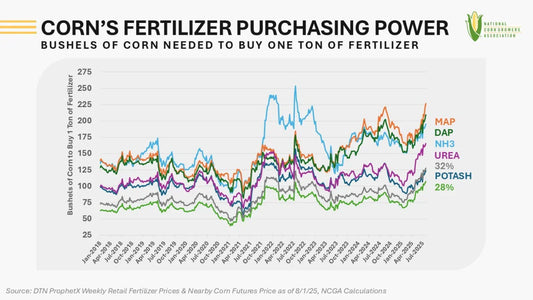
Because this chemical system relies on natural gas to create the heat and pressure required for production, our dinner tables are now tethered to the global energy market. Every time a pipeline closes or a shipping lane is blocked, the cost of a loaf of bread moves in lockstep.
We are seeing the fragility of this choice. The fertilizer crisis and the energy crisis are actually the same event. When we outsourced the work of microbes to factories, we made ourselves vulnerable to the whims of geopolitics. The biological path was local, free, and resilient. The chemical path is global, expensive, and fragile.

Returning to the Living Logic
The way forward requires a quiet revolution. We must move back toward the logic of life. The microbes that have inhabited our soil for eons already know how to feed the world. They do not require a natural gas pipeline or a factory. They simply require an environment that allows them to function.
True leadership in this era of scarcity means admitting that the industrial experiment was a detour. To secure our food supply, we must reinvest in the biology of the ground. When we support the microbial communities that fix nitrogen naturally, we build a system that is immune to energy spikes. We shift our focus from feeding the plant to feeding the soil.
The goal is not to go back in time, but to move forward with a more sophisticated understanding of how life actually works. We can choose to stay dependent on the echoes of the munitions factory, or we can choose to partner with the biology that built the world. Resilience is not found in a tank of chemicals. It is found in the living, breathing architecture of the earth.
Tags: